img
What we do

Influence educational policy

img
img img

We are a movement of responsible teachers who are always happy to help responsible state officials and agencies

img
We are working to improve the status of educators
We are setting new standards for the teaching profession

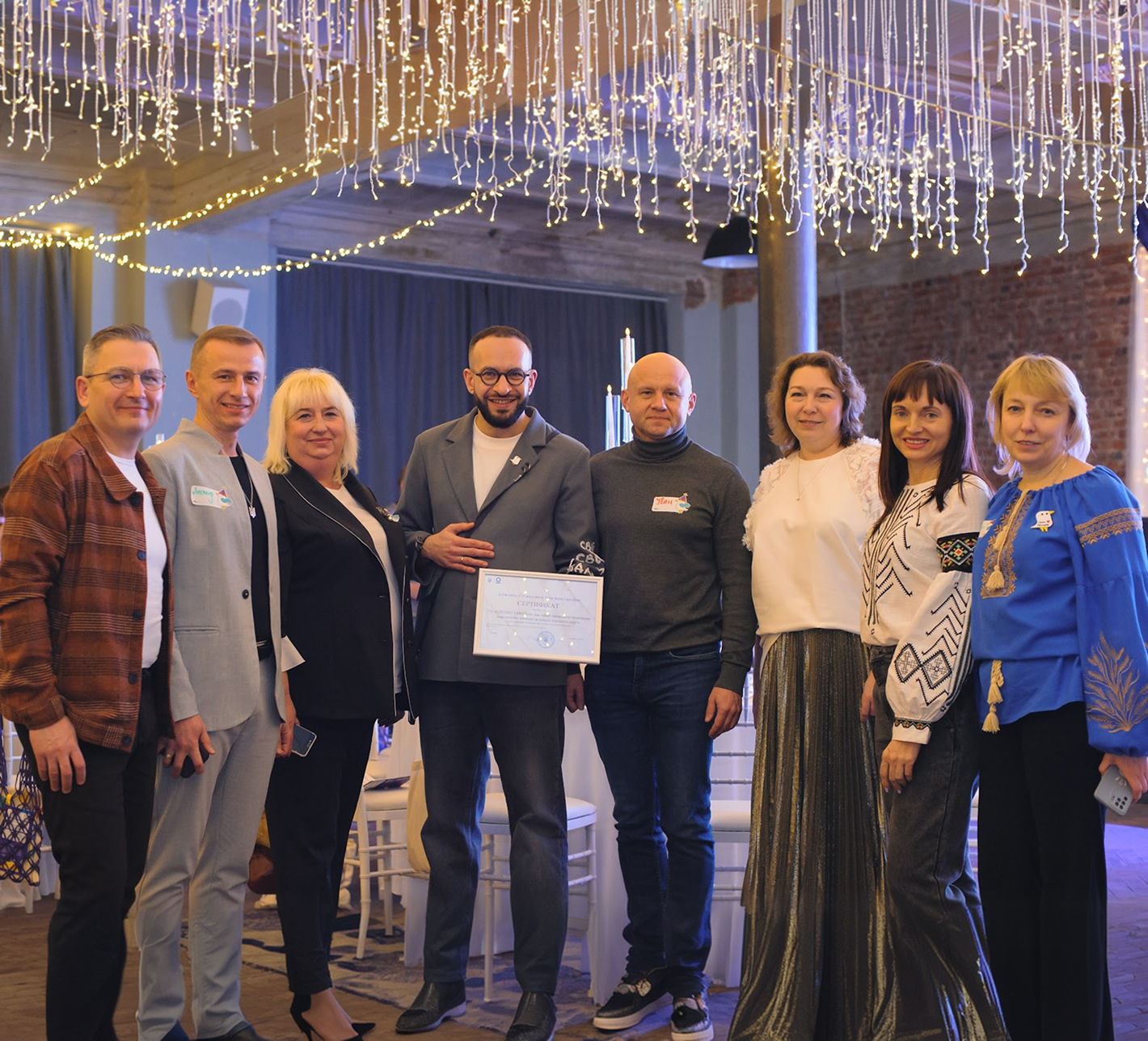
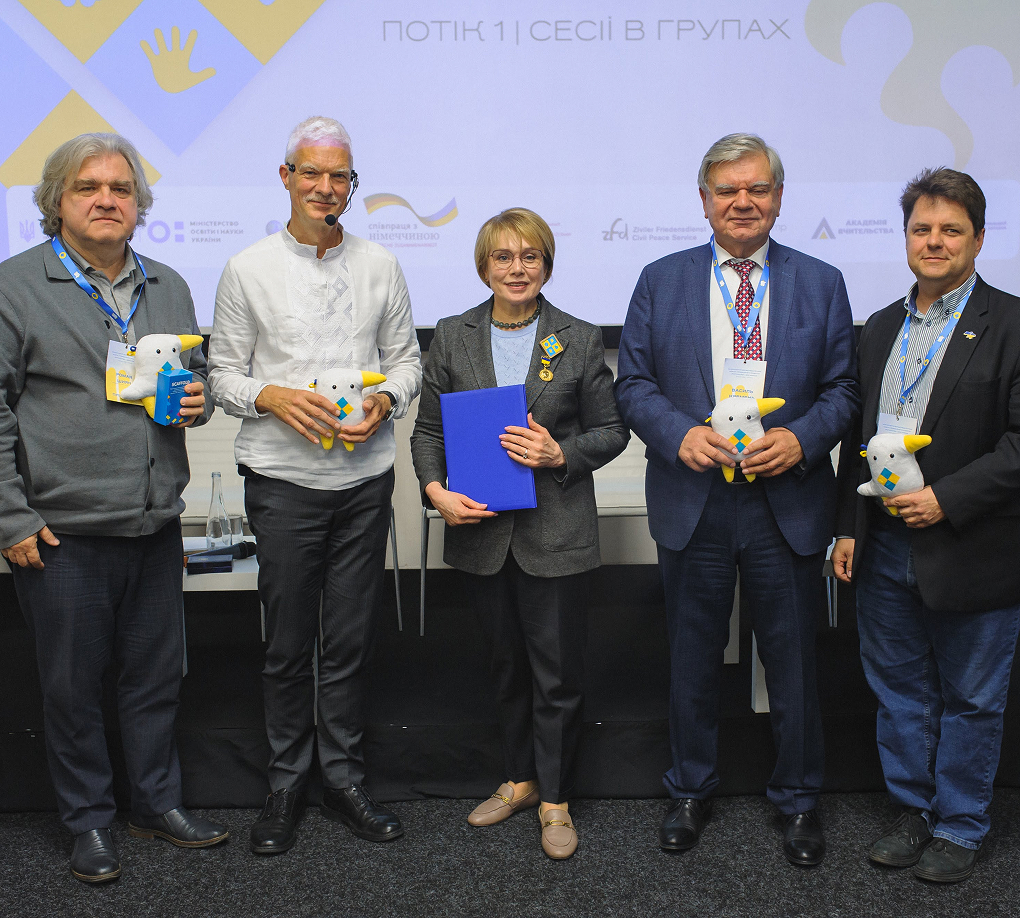
We actively participate in the development and support of advanced educational policies, the New Ukrainian School reform; we promote the status of educators and the development of new professional standards. We have signed cooperation memoranda with The Ministry of Education and Science, the Ukrainian Institute for Education Development, the State Service of Education Quality and its territorial departments, the Office of the Education Ombudsman, the Institute of Education Content Modernization, and other agencies.

img
img img
img
img

New Ukrainian School

The concept of the New Ukrainian School (NUS) accumulated modern education ideas and approaches. In September 2017, a new law “On Education” was passed. Since September 2018, primary students across Ukraine have been joining the school system following new approaches.

September 2017 – law “On Education” adopted
September 2018 – learning and teaching according to new standards
2030 — the first nationwide graduating class under the New Ukrainian School reform

The EdCamp Ukraine team played an active role in developing the New Ukrainian School concept and the related education legislation and standards, as well as new professional standards for educators, through cooperation with the Ministry of Education and Science of Ukraine. From 2016 to 2020, Oleksandr Elkin and Olena Masalitina served as advisers to the Minister of Education and Science.

img

NUS

New Ukrainian School
What is NUS?

NUS is a profound reform of the school system from the 1st through 12th grades.

What is its major principle?

Being child-centered.

Our community of responsible teachers is built upon the same humanistic foundation.

POVIR educational platform

POVIR is a government–civil society project designed to address learning losses and learning gaps (which is what the project’s Ukrainian name stands for) caused by the COVID-19 pandemic and Russia’s full-scale invasion of Ukraine. This challenge created the need for an innovative solution that could support students as they navigate challenges in their learning.

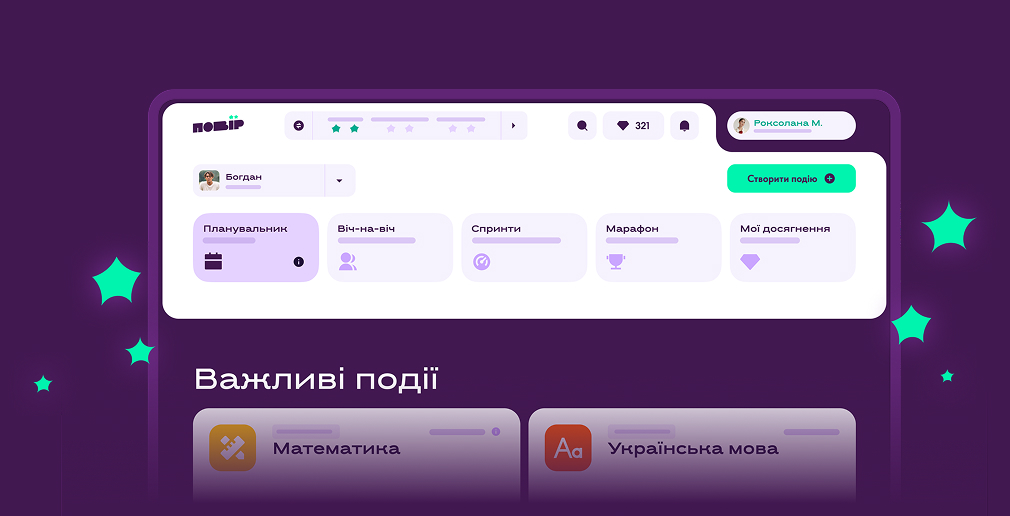
POVIR is a gamified online platform for learning and communication between teachers and students. During the pilot phase, students were able to study Ukrainian, mathematics, and English. In the future, they will also be able to improve their knowledge of physics, chemistry, and the history of Ukraine.

In 2026, the POVIR project was named one of the top 10 finalists of the Global EdTech Prize in the Non-Profit category.

Overcoming learning loss and gaps

POVIR educational platform

English

Math

Ukrainian

Skills for life

The pedagogical model consists of two formats. They are:

Sprints

“Quick” consultations to help address immediate difficulties, such as homework or preparing for a test. They are provided at the student’s request and consist of six individual 30-minute sessions for each student.

Marathon

“In-depth” consultations — systematic work (an intensive program structured as a game-based adventure) based on an agreement between the student and a coach and SEL educator. The marathon consists of a series of ten 60-minute sessions, held individually and in small groups.

In addition, during the marathon, each student is offered six one-on-one sessions with an SEL educator. This is where social and emotional learning is integrated with academic learning, allowing students to strengthen their SEL skills for better learning and personal growth.

Разом ми зможемо
18,93 %

students’ progress in recovering learning loss

img

EdWay national platform

EdWay is a national platform providing professional development opportunities for educators. It was founded by EdCamp Ukraine and operated under our care from June 1, 2021, to November 1, 2025.

The platform’s purpose:

Digital support for participants in educators’ professional development:
  • searching for and selecting opportunities
  • decision-making and planning
  • communication and feedback
  • verification and quality assurance
Building a collaborative environment and competitive conditions for the professional development market based on:
  • equality and mutual respect
  • transparency
  • accountability
  • alignment with national education policy
My educational companion
created for professional development
img
img

Five innovative initiatives in professional development:

img

Freedom of choice

Educators can now choose where, how, when, and with which provider they pursue professional development (PD).

img

“Money follows the teacher”

At least 150 hours of PD over five years are funded by the state and local budgets, amounting to at least 2% of the education subvention.

img

Life-long learning

Annual professional development is mandatory.

img

Diversity

The range of PD areas, types, and formats has been expanded.

Demonopolization

In addition to educational institutions (postgraduate education institutions and higher education institutions), other entities can now provide professional development services without mandatory licensing or accreditation of their programs.

EdWay is now the Vektor platform.

As you read this, the EdWay platform has already been transferred to state ownership free of charge. It is now managed by the Ukrainian Institute of Education Development and has a new name, Vektor, while the EdWay platform’s operating model is ready to be expanded to other areas of activity both in Ukraine and worldwide.

Center for Educational Research

Our Center for Educational Research supports Ukraine’s participation in national and international education research projects with the support of the Organisation for Economic Co-operation and Development (OECD). We help connect research data with the experience of the education community to better understand the challenges facing education. The findings of these studies help inform education policy and decision-making by the relevant committee of the Verkhovna Rada of Ukraine, the Ministry of Education and Science of Ukraine, and other institutions working with schools and communities.

Researching education

  • International projects

  • Education analytics

  • Education policy

  • System development

TALIS — Teaching and Learning International Survey
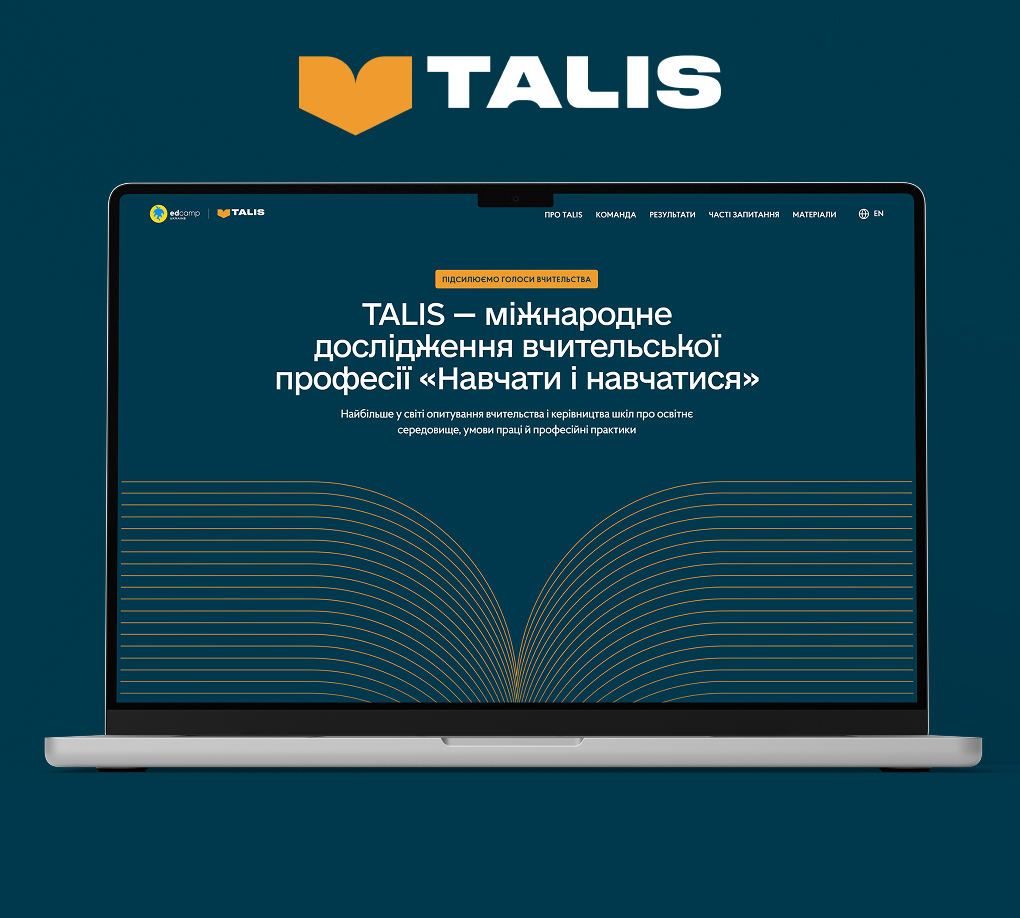
TALIS — Teaching and Learning International Survey

Amplifying teachers’ voices

Focus of the study

In the 2024–2026 survey cycle, the survey covers nine core topics and two additional ones:

  • teachers’ instructional practices
  • school leadership
  • teachers’ professional practices
  • teacher education and preparation
  • teacher feedback and development
  • school climate
  • job satisfaction
  • human resource issues
  • stakeholder engagement
  • teacher self-efficacy
  • innovation and equity
  • diversity

Special areas of focus in TALIS 2024–2026 relevant to Ukraine

These include social and emotional learning; equity, including gender equality; the use of digital resources, including artificial intelligence; their use in hybrid learning; and the impact of environmental sustainability.

Who participates:

  • school principals
  • lower secondary teachers (Grade 5–9)

Looking ahead

The survey findings are essential for gaining a better understanding of educators who continue working with students during the war; identifying aspects of the teaching profession that need improvement in order to enhance the effectiveness of education and the well-being of students and teachers; and developing education policies. Other countries that have already participated in TALIS have been able to use its findings to improve teachers’ working conditions and enhance the quality of the educational process.

survey website

SSES — Survey on Social and Emotional Skills in Ukraine

Focus of the study

Social and emotional skills are individual abilities, traits, and characteristics that can be developed throughout life and are important for academic achievement, social relationships and cohesion, competitiveness in the labor market, active citizenship, and overall well-being.

SSES — Survey on Social and Emotional Skills in Ukraine

Live in ХХІ century

Who participates:

students aged 10 and 15

teachers

school administrators

parents or guardians

Having both 10-year-old students studying under the New Ukrainian School reform and 15-year-old students who started school before the reform participate in SSES provided an additional opportunity to examine the reform’s impact on the development of students’ social and emotional skills.

Second cycle

EdCamp Ukraine is currently working on the second cycle of the study, which began in 2025 and will continue through 2027. This cycle will introduce a number of new elements. For example, empathy will be measured through children’s responses to hypothetical scenarios, while the scope of the study will expand to include new questions about the use of artificial intelligence, the impact of social media, the development of civic engagement, environmental responsibility, and attitudes toward lifelong learning.

Looking ahead

The data collected through SSES 2025–2027 will provide a basis for changes in education policy and the broader implementation of social and emotional learning. Social and emotional skills are important for students’ cognitive development and will help address learning losses and gaps. Greater attention to these skills may be key to making up for the years affected by the pandemic and war.

Teaching and learning

In 2018, our organization was still only dreaming of conducting TALIS in Ukraine, so we carried out the study “Teaching and Learning: How and Where Can Ukrainian Teachers Grow?” as a Ukrainian counterpart based on the key approaches of the international survey. At the time, we surveyed 8,427 educators from across Ukraine about their work, professional growth, needs, dreams, and plans.

findings
Teaching and learning

Who participated:

teachers

school administrators

parents of guardians

New opportunities

The findings of the study, together with the “Declaration on Effective Teacher Professional Development,” signed by leading education, civil society, and other organizations, gave impetus to institutional changes in teacher professional development.

With expert participation from EdCamp Ukraine, the Ministry of Education and Science prepared detailed methodological recommendations for schools explaining how teachers could make use of the new opportunities. To institutionalize these changes and ensure the sustainability of the process, the Ministry of Education and Science established a dedicated working group on the professional development of educators to oversee the implementation and further development of these changes (Order No. 223 of the Ministry of Education and Science of Ukraine, dated February 17, 2020). A significant proportion of the working group members were educators from our community.

Kids and papers

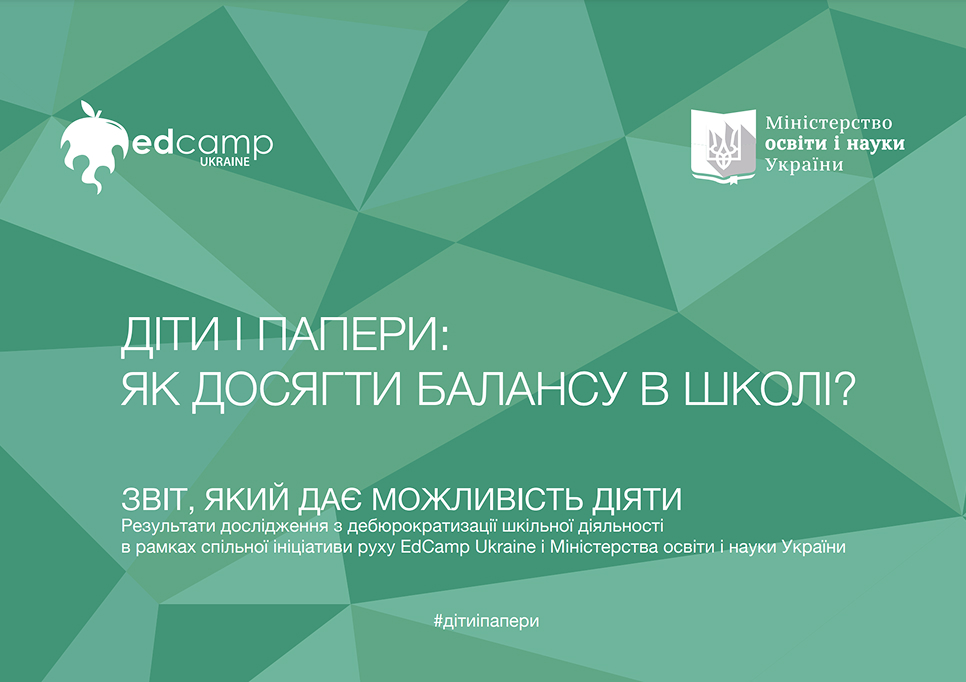
In the “Kids and papers” study, we examined the amount of reporting required of teachers and school administrators and looked for ways to reduce it. As a result, the Ministry of Education and Science developed a standard guideline that made work plans and lesson plans optional and allowed teachers to prepare calendar-based thematic plans in a format of their choice.

We also succeeded in eliminating outdated requirements for document preparation and formatting. Another significant outcome of the “Kids and papers” study was the elimination of the outdated practice of keeping records of children “by neighborhood.”

findings
Kids and papers

22 %

In cooperation with the Ministry of Education and Science, we reduced paperwork for educators by one-fifth and eliminated some requirements imposed on schools by various institutions.

Public accreditation

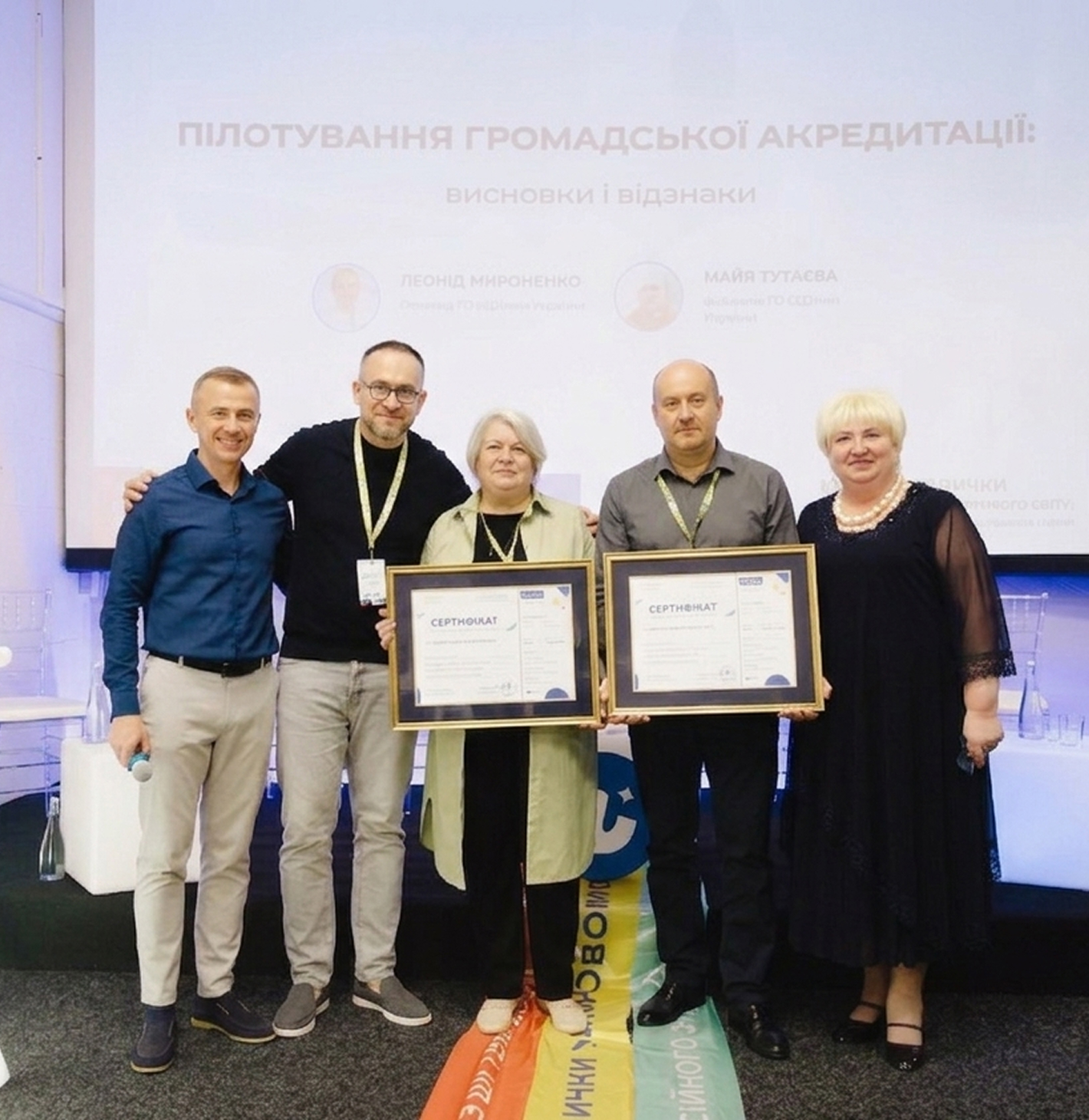
EdCamp Ukraine has become the first civil society organization in Ukraine officially authorized to conduct public accreditation of general secondary education institutions.

This authority was granted by the State Service of Education Quality of Ukraine in accordance with current education legislation and the approved Procedure for the Accreditation of Public Professional Associations and Legal Entities Conducting Independent Evaluations of the Quality of Education and Educational Activities (Order of the State Service of Education Quality of Ukraine No. 01-10/650 dated December 17, 2025).

Public accreditation (PA) conducted by the EdCamp Ukraine NGO is voluntary, partnership-based, and developmental in nature. Its purpose is not to control or punish, but to support educational institutions in improving their learning environment, teaching practices, management processes, and interaction with the community.

Two schools that completed PA

Gymnasium No. 5 of the Zviahel City Council

Lutsk Lyceum No. 1 of the Lutsk City Council

The public accreditation model developed and implemented by the EdCamp Ukraine NGO is based on the following principles:

  • transparency and objectivity;
  • a nondiscriminatory and inclusive approach;
  • psychological safety and well-being of participants in the educational process;
  • оreliance on verified data and real-world practices;
  • partnership between the expert team and the educational institution.
HOW DOES IT WORK? READ MORE

Strategy for Implementing Gender Equality in Education through 2030

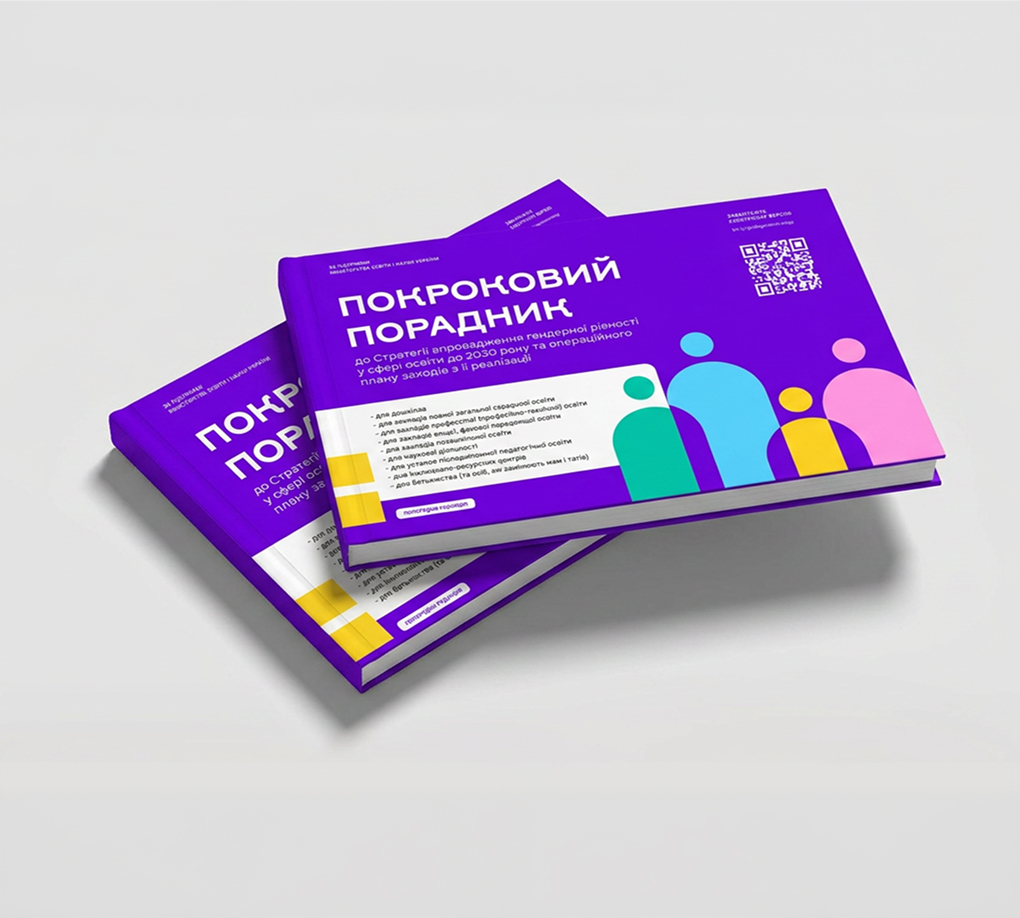
On December 20, 2022, the Cabinet of Ministers of Ukraine approved the Strategy for Implementing Gender Equality in Education through 2030 and adopted an operational plan for its implementation for 2022–2024. This landmark document covers all levels of education and was developed by a group of experts that included EdCamp Ukraine specialists, who were involved in and helped organize its work.

view the directive

Step-by-step guide

We continued working on the implementation of this strategy. Together with a group of educators involved in this work, we developed a practical tool — a step-by-step guide for implementing the strategy across different levels of education.

The guide helps you:

  • assess your team’s level of awareness of gender equality issues;
  • complete thematic professional development programs;
  • conduct an internal audit to identify discriminatory practices.
guide

Teacher professional learning framework

In May 2025, with the support of the Organisation for Economic Co-operation and Development (OECD), EdCamp Ukraine held the “Peer-to-Peer” seminar. For the seminar, the OECD team prepared an analytical paper, “Teacher Professional Learning: International Practices as a Starting Point for a Future Vision for Ukraine,” exploring the entire teacher career journey — from choosing the profession to retirement — and examining international practices that could be useful for Ukraine.

We prepared a separate chapter describing the Ukrainian context of teacher education and professional development, taking into account our realities, challenges, and potential.

analytical paper
Teacher professional learning framework

In cooperation with the OECD

The teacher career journey 

All-Ukrainian radio dictation of national unity

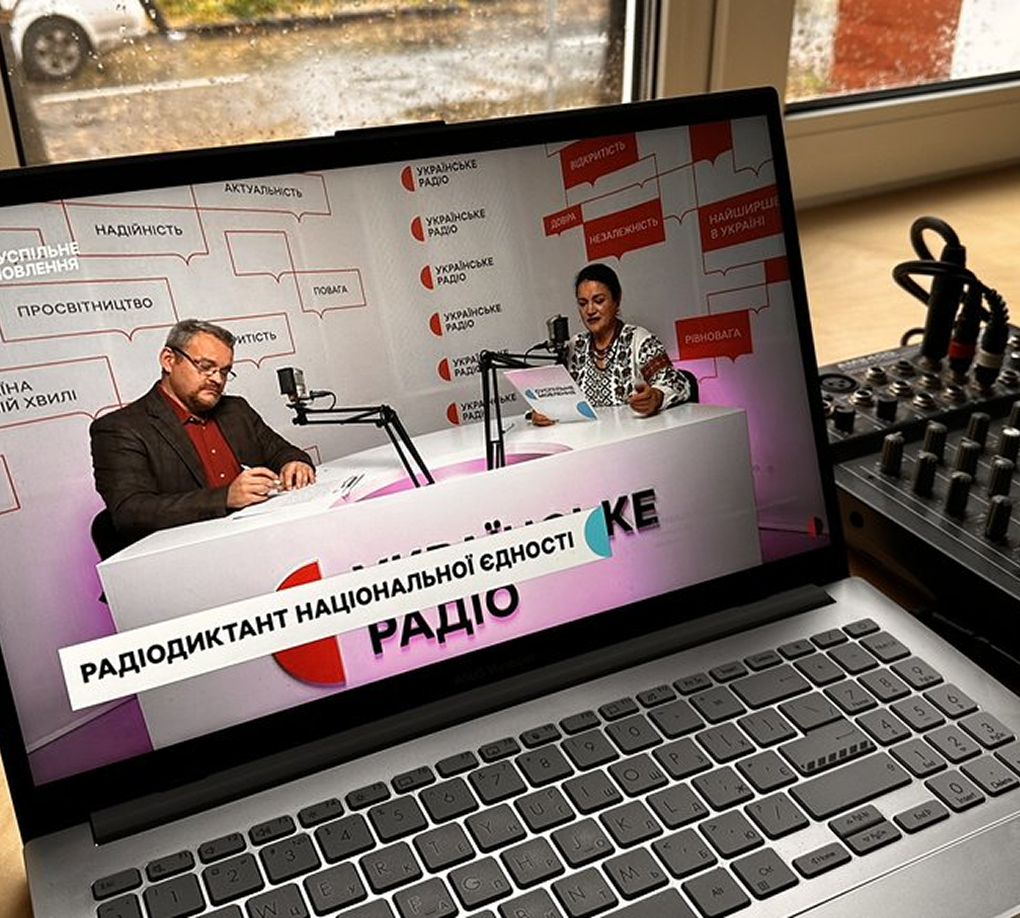
We are incredibly proud to have joined the organization of one of Ukraine’s best-known flash mobs — the writing of the Radio Dictation of National Unity. Of course, our entire team takes part every year, but for the past five years, our responsibility in this project has been to quickly and carefully check all the electronic and handwritten submissions received from around the world. It is a major responsibility and an important mission that brings us great satisfaction.

The team of reviewers works under the guidance of Olena Masalitina. Its composition changes or expands every year, but the reviewers always remain anonymous to ensure the transparency of the process. We are proud of our cooperation with Suspilne Movlennia and its results!

2021

14,573 dictations checked

2022

23,567 dictations checked

2023

14,781 dictations checked

2024

11,731 dictations checked

2025

11,109 dictations checked

All-Ukrainian radio dictation of national unity

Annual nationwide flash mob

WHAT IT WAS LIKE IN 2025
img

#EducationWithoutCorruption

The EdCamp Ukraine team contributed to the development and promotion of anti-corruption tools for Ukrainian schools in the form of games, quests, thematic lessons, and scenarios. Our integrity ambassadors and anti-corruption in education training team show educators how to use these tools.

Anti-corruption tools for schools:
games quests
thematic lessons scenarios
img
img

Findings from conversations with children about corruption

Teachers learn how to talk with children about corruption prevention in an engaging and informal way. Testing these tools in schools has shown that:

10 %

The number of students who see corruption as clearly negative increased by 10 %.

img
9 %

The number of students who believe that corruption cannot be justified increased by 9 %.

img

Students became better at recognizing signs of corruption in everyday practices, including at school.

FIGHT CORRUPTION
img
img img
Practical advice and explanations about:
integrity ethics fighting corruption

"Traffic light for education integrity” guide

The “Traffic light for education integrity” guide was published to explain in plain language what constitutes corruption and what does not.

DOWNLOAD

ENT – Educational NGOs Together

ENT is an alliance of organizations called "Educational NGOs Together” that signed the “Memorandum of Cooperation between Civil Society Organizations and Associations in Support of Education Reform.” It was signed at the Fifth National EdCamp Ukraine (Un)conference in 2019 by eight civil society organizations working in the field of teacher professional development.

Several key ideas agreed upon by all members of the alliance:

img img
01

The New Ukrainian School reform must continue regardless of political circumstances.

02

The reform must be real, not merely declarative.

03

The reform must be based on progressive and humanistic values.

04

Levels of violence and stress in education must be reduced.

img
img
img

Main goal

Supporting the NUS reform

memorandum

Within the alliance, member organizations exchange experience, knowledge, opinions, ideas, and contacts — everything that can help achieve this goal.

Organizations that are members of ENT

img

EdCamp Ukraine NGO

img

Educational Era NGO

img

Batky SOS NGO

img

International Charitable Fund “Impact Hub Odessa’”

img

Public Union “Osvitoria”

img

Smart Osvita NGO

img

Ukrainian Institute for the Future NGO

img

Center for Innovative Education “Pro.Svit” NGO